
DANGER
Always isolate power before touching wiring. If you smell burning or see smoke, stop and call Roy immediately.
The Kelvin Scale: Warm vs Cool White
Color temperature is measured in Kelvin (K). Lower numbers mean warmer, cosier light; higher numbers mean cooler, brighter light.
- Warm White (2700K–3000K): Best for living rooms, bedrooms, and cosy spaces. Mimics old incandescent bulbs – soft, amber tones.
- Cool White (4000K–5000K): Best for kitchens, bathrooms, and task areas. Crisp and neutral — brighter than warm white and good for food prep and grooming.
- Daylight / Cool Daylight (~6000K): A very cool, bluish-white light sometimes labelled “daylight” on packaging. Can feel stark in living spaces; it suits workshops, garages, laundry rooms, display or task areas where maximum clarity matters. In lounges and bedrooms it often feels too clinical — many people prefer 2700K–4000K at home.
Tip: Keep the same colour temperature throughout a room for consistent ambience (mixing 2700K lamps with 6000K in one fitting rarely looks right).
Wattage vs Lumens: The Conversion Table
Old bulbs were rated in watts; LEDs are much more efficient. Use lumens (lm) to judge brightness. Here's a simple guide:
| Old Bulb (Watts) | New LED (Watts) | Brightness (Lumens) |
|---|---|---|
| 40W | 4–5W | 450 lm |
| 60W | 7–9W | 800 lm |
| 100W | 12–14W | 1600 lm |
Example: A 6W LED typically replaces an old 60W bulb (around 800 lm).
Dimmer Warning
If you have dimmer switches, always check for the “Dimmable” label on the bulb. Non-dimmable LEDs on dimmers can flicker, buzz, or fail prematurely. For dimmer circuits, use bulbs marked dimmable and pair them with a dimmer that is designed for LEDs.
Leading edge vs trailing edge: Traditional dimmers were often leading edge (the classic triac type designed around tungsten and halogen loads). Many modern dimmable LEDs work better with trailing edge dimmers, which tend to give smoother low-level dimming and fewer buzz or flicker issues. Some dimmers can be set to either mode or are auto-configuring. If an LED flickers at low brightness or buzzes, the wrong dimmer type or an under-loaded circuit is a common cause — a qualified electrician can confirm load limits and swap the module or dimmer to match your lamps.
Electrician’s pick
Varilight V-Pro dimmers
I highly recommend the Varilight V-Pro range: they are sophisticated, LED-friendly dimmers with flexible setup and generally behave well with quality dimmable lamps. If you already have a decent faceplate, you can often replace only the module behind it to cure a flickering or buzzing dimmer without changing the whole switch. Alternatively, a complete V-Pro dimmer with a basic white plate and knob is a straightforward upgrade.
 V-Pro replacement module
Swap a faulty or buzzing module and keep your existing faceplate (check compatibility with your grid).
View on Amazon
V-Pro replacement module
Swap a faulty or buzzing module and keep your existing faceplate (check compatibility with your grid).
View on Amazon
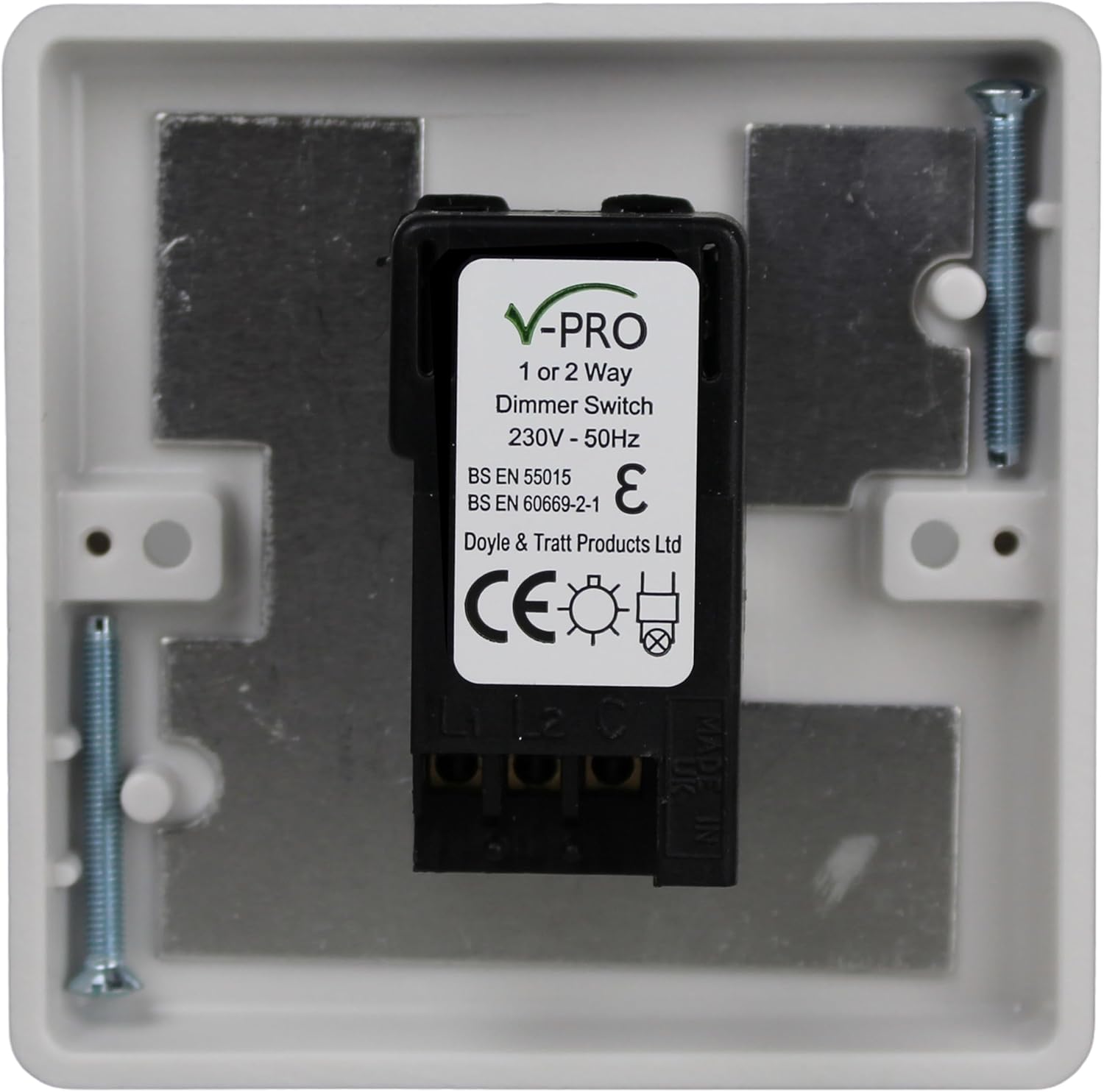 Complete V-Pro dimmer
Full dimmer with white moulded plate and knob — ready to fit where a whole-unit swap suits.
View on Amazon
Complete V-Pro dimmer
Full dimmer with white moulded plate and knob — ready to fit where a whole-unit swap suits.
View on Amazon
As an Amazon Associate I earn from qualifying purchases. Affiliate disclosure.
Contact the Expert
Once you've picked your lights, book Roy to install them professionally. Downlights, pendants, or full lighting design – we cover Margate, Ramsgate, and Broadstairs.
Lighting Service & LED InstallationProfessional Safety Checklist
- Isolate power at the consumer unit before any electrical work
- Use a voltage tester to confirm circuits are dead
- Ensure all work complies with BS 7671 (IET Wiring Regulations)
- Keep a record of any modifications for future reference
- When in doubt, consult a qualified electrician
 Leave a Review
 Request a Quote